Rust, how a secret mountain base survived a whole wipe
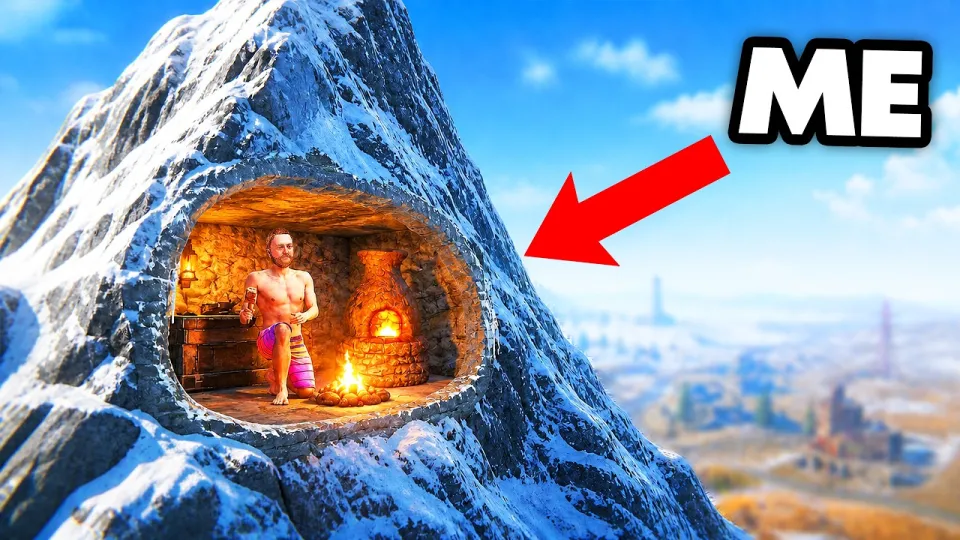
Video: I Lived in a Secret Mountain Base in Rust
Need articles like this for your video? They help promote it on YouTube and Google — order them in the Telegram bot @sat_sit_bot. The bot writes and publishes the articles itself (with your YouTube video embedded) on popular topical websites (no ads). Your first 50 articles are free.
Key takeaways
- Memeio spent an entire Rust wipe living in a small base tucked into a mountain, and no one raided it.
- The core idea: a base that is never found does not need walls, turrets or upkeep-heavy honeycomb.
- Viewers noted the camouflage is far from perfect — the base was still visible to anyone looking up the slope.
- A practical eco-raiding tip from the comments: broken wooden spears can be crafted into stone spears, effectively doubling your spear count early.
- The video also touches on cheaters and how they affect a solo wipe, a recurring complaint in the Rust community.
Rust is a survival game where the safest base is the one nobody ever finds, and that is exactly the strategy behind a full-wipe experiment in which a solo player lived out of a tiny structure hidden in the mountains and was never raided. The run comes from Memeio, whose channel Memeio on X is the main hub for updates on these wipe-long stunts, and the takeaway is simple: location and camouflage beat honeycomb far more often than players expect.
What a secret mountain base in Rust actually means
A secret mountain base is a small, low-cost structure placed in terrain that players rarely walk through, built with the assumption that it will never be found rather than the assumption that it will be defended. In Rust, most bases are designed around raid cost: stone and metal walls, honeycomb layers, turrets, and enough upkeep to keep it all running. A hidden mountain base inverts that logic. You spend almost nothing, keep the footprint tiny, and rely on the map itself as your defense.
The approach has real trade-offs. A 1x2 or 2x1 tucked into a rock formation is cheap to rebuild and almost invisible from the main roads, but it has no room for large furnaces, no safe place for a workbench upgrade path, and no fallback if a roaming group stumbles onto it. What it does have is the single most valuable property in Rust: nobody has a reason to look there.
Why the location matters more than the walls
The strongest raid defense in Rust is never being raided, and the only reliable way to achieve that is a genuinely hidden location rather than a well-armored one. Mountain terrain helps because it breaks line of sight from the roads, from monuments and from the common travel routes players memorize during a wipe.
Good hiding spots share a few traits:
- They sit off the natural path between monuments, so random foot traffic is rare.
- They are hard to see from below and from above at the same time — a ledge, a rock overhang or a gap in the cliff face.
- They are close enough to a source of stone, wood and scrap that you are not forced to cross open ground every five minutes.
- They have a plausible reason for a passer-by to ignore them, such as being slightly awkward to reach.
The weak point is always visibility from the slope above. A base that looks hidden from the road can still be obvious to anyone standing higher up the mountain, which is precisely the criticism viewers aimed at the camouflage in this run.
The camouflage problem nobody wants to hear
Camouflage in Rust is not about making a base invisible; it is about making it not worth a second look. Players who build on mountains often assume that a small footprint and a rock-colored exterior are enough, but the game's building skins and the sharp silhouette of a square foundation stand out against natural terrain. A structure that is clearly player-made will be investigated eventually if it sits anywhere near a climbing route.
Practical camouflage measures that actually help:
- Keep the base to the smallest viable size, ideally one or two foundations, so the silhouette reads as terrain noise rather than architecture.
- Avoid exterior lights, large doors facing the approach, and obvious ladder placements.
- Use the terrain itself — build into a gap so that at least two sides of the structure are backed by rock.
- Do not place a sleeping bag cluster or a stash of boxes outside; loot bags and dropped items are the giveaway that gets small bases found.
Even with all of that, a mountain base is only hidden from players who are not actively scanning the cliffs. Groups that farm the mountains for nodes will eventually pass by.
Early-game eco raiding: the spear trick worth knowing
A hidden base only works if you can still generate loot and pressure without drawing attention, and that means cheap raiding. One of the most useful tips to come out of the discussion around this run is inventory management with wooden spears: broken wooden spears can be crafted into stone spears, so keeping the damaged spears ahead of the intact ones in your inventory lets you convert them instead of discarding them.
That effectively doubles the number of spears you get out of the same amount of stone and wood, which matters enormously in the first hours of a wipe when a solo player is trying to break into a small base or finish off a wounded opponent. The broader principle is that in Rust, the cheapest resource is usually the one you already broke.
What viewers got right about hidden bases
The reaction to the run was split between people who loved the idea and people who pointed out that the base was not actually hidden. The most useful criticism is that a small structure on a mountain slope is only invisible to someone who is not looking, and that most 'super secret' bases in Rust content are ordinary 2x2s sitting in plain sight a short walk from other players' builds.
The most useful endorsement is the opposite one: players with thousands of hours in survival games pointed out that a perfectly hidden location beats every wall, because a base that is never scouted is never raided. That logic holds across Rust, Ark and similar games — the waterfall pocket, the rock gap, the ledge nobody climbs. The catch is that it only works once per spot. The moment one player finds it, the location is burned for the rest of the wipe.
The run also runs into the topic that comes up in every Rust discussion: cheaters. A solo player relying on stealth is far more exposed to players using third-party software than a clan sitting behind turrets, and that risk is part of the honest cost of this playstyle.
Building your own hidden base: a repeatable checklist
A hidden mountain base is a repeatable process rather than a lucky spot, and it starts with scouting before you place anything. The order that works:
- Pick a mountain that is off the main monument loop, ideally with cliffs that block sightlines from the road.
- Walk the slope from below and from above and confirm the spot is not visible from either direction.
- Place the smallest foundation layout you can live with, then upgrade only the walls that face the approach.
- Split your loot — keep the expensive components in a stash away from the main structure so a single raid does not end the wipe.
- Avoid drawing attention: no visible furnaces, no rooftop turrets, no obvious external ladders.
- Move on if the spot gets discovered. Rebuilding elsewhere is cheaper than defending a burned location.
The players who get the most out of this style treat the base as disposable and the location as the real asset.
Useful links
- Memeio on X — updates, clips and announcements from the channel behind this run.
- Epidemic Sound — the music library credited for the video's soundtrack.
The verdict on mountain hiding in Rust
A secret mountain base is not a magic trick; it is a bet that nobody will walk your slope, and in this run that bet paid off for an entire wipe. The strategy works best for solos and duos who value low upkeep over storage space and who are willing to abandon a spot the moment it is compromised. It fails for anyone who builds a recognizable silhouette, lights it up at night, or assumes a mountain is empty just because the road is. If you want to see how the experiment played out, the full run is on the Memeio channel — and for announcements and clips, follow Memeio on X.
Questions & answers
Is a mountain base actually safe in Rust?
It is safe only as long as nobody scouts your slope. Mountain terrain breaks line of sight from roads and monuments, which cuts random foot traffic dramatically, but players farming nodes or climbing for a vantage point will spot a base that has an obvious player-made silhouette. Treat the location as disposable and move if it is found.
How small should a hidden base be?
One or two foundations is the practical limit. A 1x2 or 2x1 keeps the silhouette small, costs almost nothing to rebuild, and needs minimal upkeep. The trade-off is that you lose space for large furnaces and a full workbench progression, so many players keep a separate stash for valuables.
What is the spear crafting trick in Rust?
Broken wooden spears can be crafted into stone spears, so instead of dropping them you convert them. Keeping damaged spears ahead of intact ones in your inventory makes the conversion quick, and it effectively doubles the number of spears you get from the same amount of stone and wood early in a wipe.
Do cheaters make hidden-base playstyles pointless?
They make stealth riskier, because a solo player relying on not being seen is more exposed to players using third-party software than a clan behind turrets. That does not invalidate the strategy — most wipes are still decided by normal players — but it is a real cost worth factoring in when you choose a low-profile base over a defended one.
Source: I Lived in a Secret Mountain Base in Rust · Markdown version